Every operation has days when the regular carriers can't cover the work. The usual options are bad: call around and hope, or put the job somewhere the whole market can see it — rates included. A private bid board is the third option: invite only the carriers you'd actually trust on the job, and keep their bids private from each other.
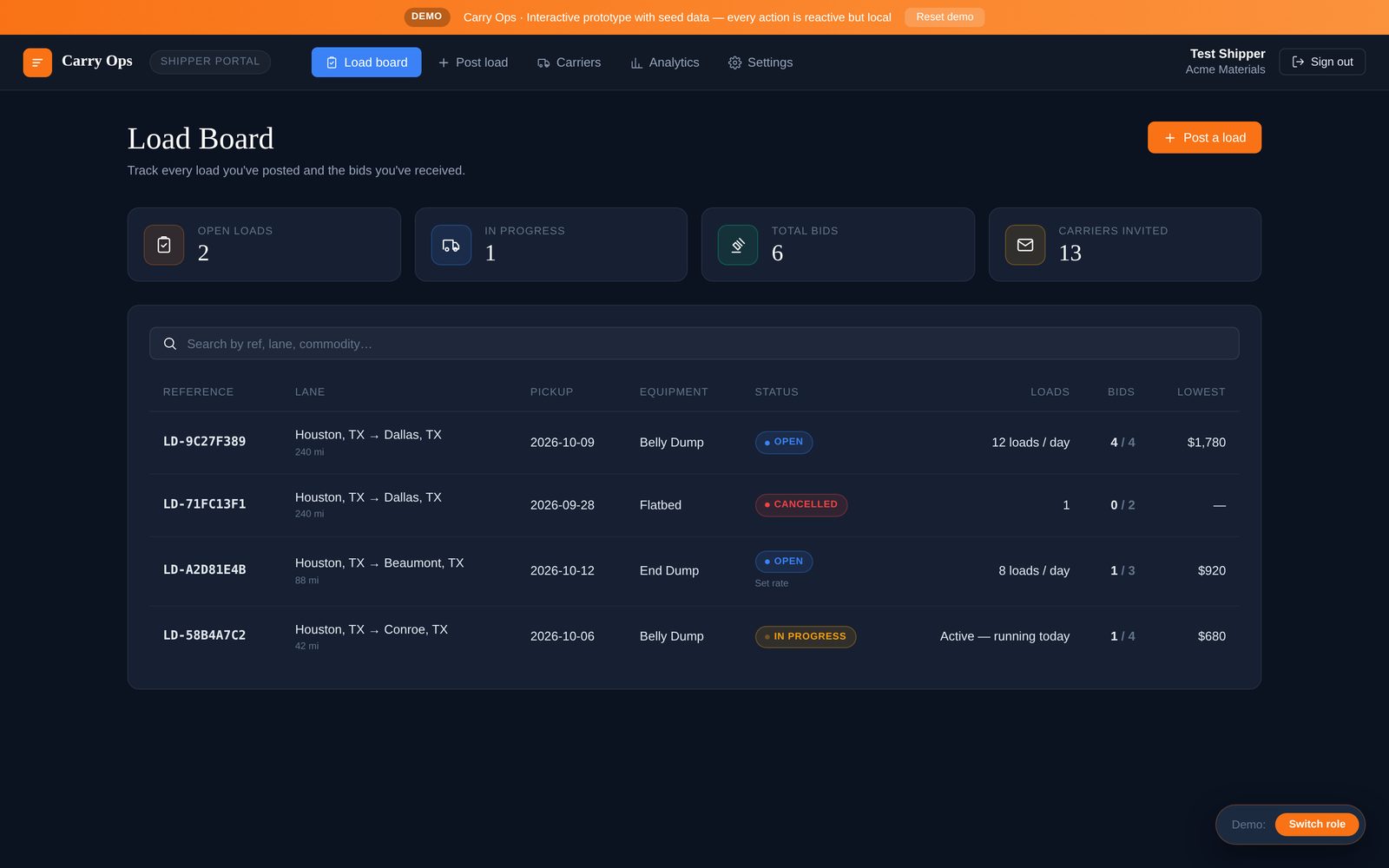
We built the private bid board in Carry Ops with Avensis Energy, an aggregator that runs its own network of carriers. For them, the question was never "how do we find any truck?" It was "how do we find the right trucks quickly, without turning our rates into a price war?"
Why open postings backfire
- Your rates become public. Everyone sees what you're paying, including your competitors and the carriers you already work with.
- The cheapest bid wins by default. With no record next to the number, price is the only thing on the screen.
- You don't know who you're getting. Insurance, safety and equipment have to be checked after the fact — if they're checked at all.
Invite only carriers who've already cleared
The bid board should sit on top of carrier verification, not replace it. When you post a job, the only carriers who see it are the ones who have already passed insurance, W-9 and safety checks and who match the work: belly dump or end dump, capacity, and the lane. That way every bid you receive is from a carrier you could actually award.
Post the job with everything a carrier needs
A good posting answers a carrier's questions before they call you:
- Lane — pickup and destination
- Equipment and tonnage per load
- Loads per day and the window — how many days the job runs
- Pickup hours and any site notes: tarps, driver assist, access
- When bidding closes
Two ways to award
- Open bid. Invited carriers submit a price. They never see each other's bids.
- Set rate. You name the rate you're willing to pay, and carriers who can run it accept or decline. No haggling. If nobody takes it, switch to open bid or adjust the rate.
Set rate is useful when you already know the market for a lane and just need capacity. Open bid is better for a new lane or an unusual job.
Award on the full picture
When the bids come in, each one should sit next to the carrier's record: safety rating, on-time history, completion rate and disputes. A carrier who's slightly cheaper but late every third load isn't the bargain the number suggests. Seeing the record at award time is what turns "cheapest" into "best combination" — and gives good carriers a reason to want your invitations.
After the award
The awarded load should flow straight into the rest of the operation: the carrier sees it in their portal, dispatch can coordinate drivers, and every load on the job is ticketed, delivered and reconciled on the same record. A bid board that stops at the award just moves the paperwork somewhere else.
How this works in Carry Ops
The Private Bid Board in Carry Ops lets you post a job — lane, equipment, tonnage, loads per day, window and notes — and invite only carriers that have cleared verification and match the work. Run it as an open bid or a set rate; carriers never see each other's bids. Each bid shows the carrier's safety rating, on-time history, dispute count and completion rate next to the price, and the awarded load moves straight into the carrier's portal and the ticket flow.