Most aggregators and contractors keep some version of a "carriers I trust" list. It's usually a spreadsheet, or one dispatcher's memory. It goes stale, it can't be shared, and when a job comes up, the cheapest bid wins by default because there's nothing else on the screen.
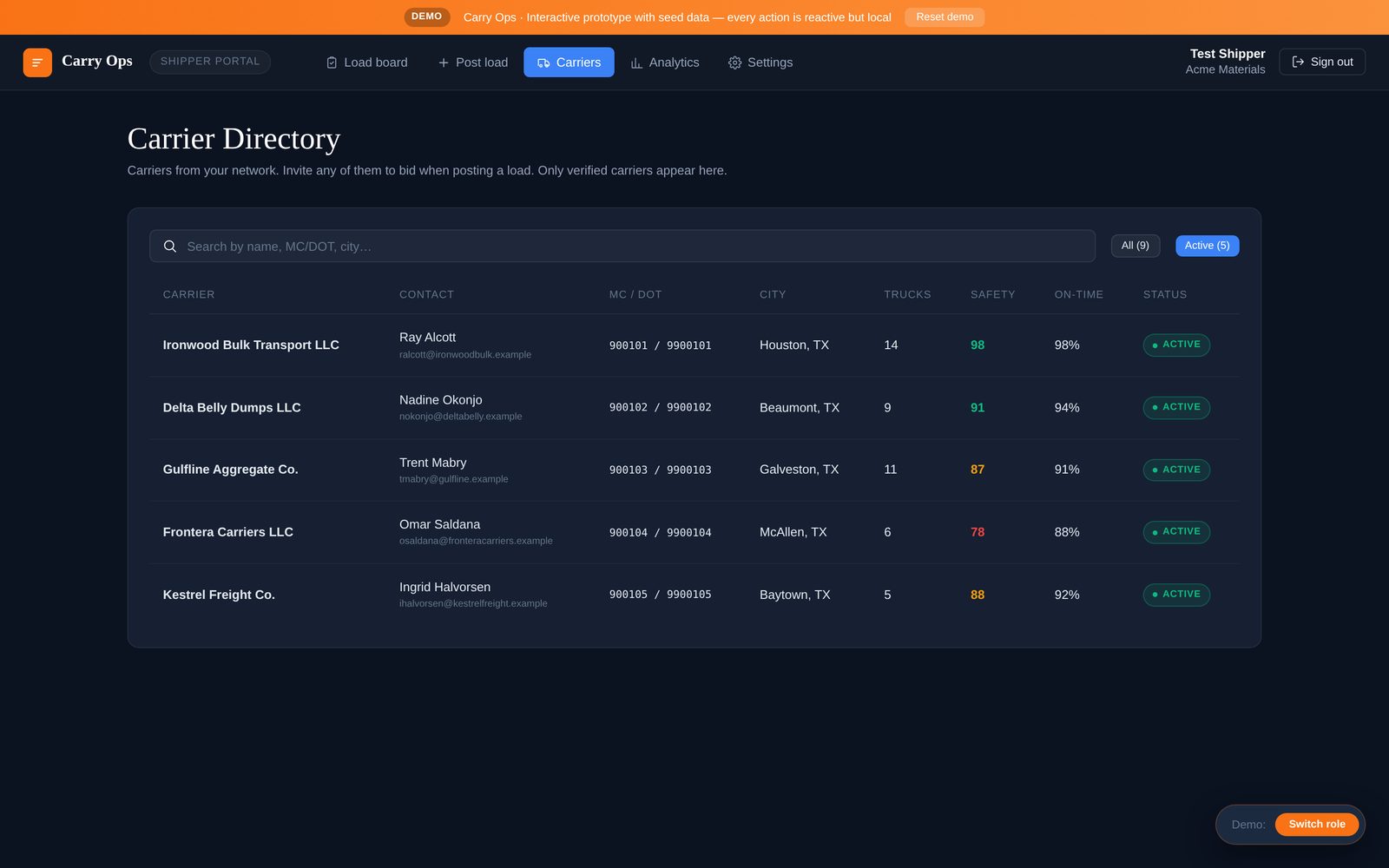
Building Carry Ops with Avensis Energy, an aggregator that runs its own carrier network, we kept hearing the same thing: the price is never the whole story. A carrier who's a little cheaper but late every third load, or who disputes every weight, costs more than the one who just shows up. The trick is to make that knowledge visible at the moment you award the work.
What's worth measuring
You don't need a complicated formula. Four things tell you almost everything about a hauling carrier:
- On-time history. Did their trucks show up when the job needed them?
- Completion rate. When they accepted work, did they run all the loads?
- Disputes. How often did their tickets end up in an argument over weights or delivery?
- Safety. Their DOT safety rating and inspection history.
Add equipment and capacity — belly dump or end dump, how many trucks — and you know whether they can actually run the lane before you even ask.
Build the record from real loads, not memory
The reason most scorecards fail is that someone has to fill them in. Nobody does. The record has to build itself from the work: every ticket that was delivered on time, every load completed, every dispute raised against a ticket. If your tickets live on paper, that data doesn't exist anywhere you can count it. Once the ticket is electronic, the scorecard is a by-product.
Put the record next to the price
A scorecard in a separate report doesn't change decisions. It has to be on the same screen as the bid. When you're looking at four offers on a haul, you want each one shown with the carrier's safety score, on-time history, dispute count and consistency right beside the number. Then "award to the cheapest" becomes "award to the best combination," and you can explain why.
Keep it private, keep it fair
Two rules make this work with carriers instead of against them:
- Bids stay private. Carriers never see each other's numbers. Your rates aren't shopped around the market, and nobody is pushed into a race to the bottom.
- Performance earns invitations. Carriers who run well get invited to more work. That's a reason for good carriers to want to be on your network — not just a way to grade them.
Start with what you already know
You don't need a year of data to start. Most operations can score their top ten carriers today from memory and a few months of tickets: who's reliably on time, who leaves loads uncovered, whose tickets always seem to be in dispute. Write that down as a starting point, then let real loads take over.
Be careful with two traps. First, don't score on price — price belongs next to the record, not inside it, or you'll end up rewarding the cheapest carrier for being cheap. Second, don't let a single bad day define a carrier. Look at patterns over dozens of loads: one late truck in a storm isn't the same as late every Monday.
The payoff shows up fast. When dispatchers can see the record next to the bid, the conversation changes from "who's cheapest?" to "who's going to run this job well?" — and the carriers who perform start getting more of your work, which is exactly the incentive you want.
How this works in Carry Ops
In Carry Ops, every load a verified carrier runs builds its record — on-time history, completion rate, disputes and safety rating — from the same tickets the rest of the platform uses. When your regulars can't cover a job, you post it on a private bid board: only carriers who have cleared verification and match the equipment and lane are invited, bids stay private, and you can run open bids or set the rate. Every bid appears with the carrier's record next to the price, so you award on the full picture.